Regulation

What a Chilean coin knows about breaking up the supermarkets

Article #476

A friend and colleague in Chile was knocked off his bike by a delivery motorcycle, rupturing a hamstring. Four months off the bike. I wanted to post him honey from our hives, but quarantine rules will not let honey near a border, so he got possum and merino socks instead. Back came an intriguing coin.

One coin, two sides. Seven economists, the “Chicago Boys”, are featured, with one face honouring them as the architects of Chilean economic development. On the reverse sits Chile’s coat of arms and its national motto: Por la razón o la fuerza. By reason or by force. The coin tells the story of a country that tried both.
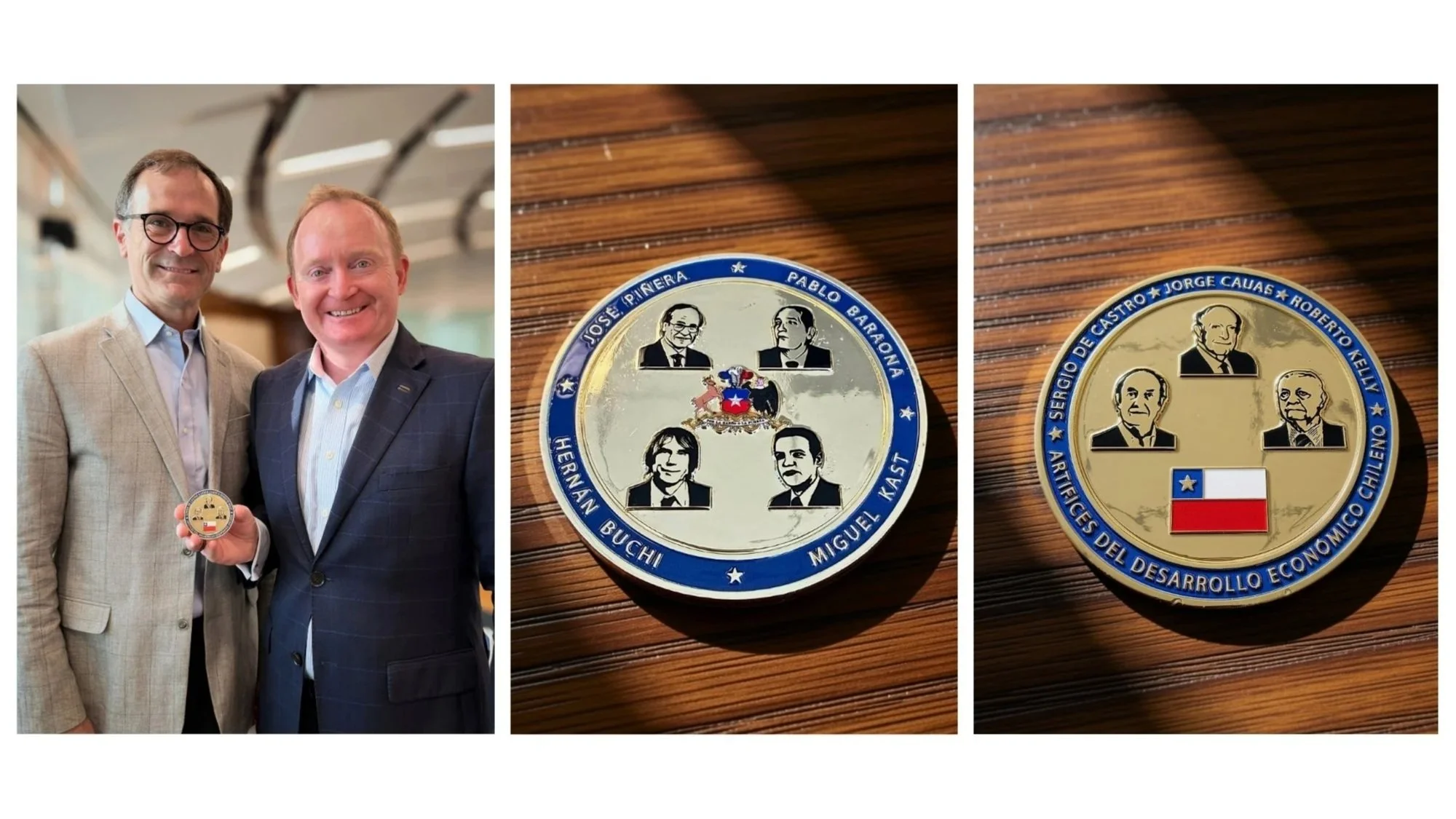
Nick with Rodrigo and the Chilean coin he kindly gifted him

From 1971 the Allende government nationalised copper, with Congress voting for it. It took the banks, and by late that year the state controlled seventeen of them holding around 90% of the country’s credit. Factories were requisitioned into public ownership. Wages rose and prices were held down. [1]

Then the shelves emptied. A black market grew. By January 1973 the government was rationing dozens of essentials, bread among them, and neighbourhood supply and price committees decided who got what. By December 1973, consumer prices were 508% higher than a year earlier. [2]

Now look at our ballot.

The Greens would force Foodstuffs and Woolworths to sell 120 stores and two distribution centres into public ownership as KiwiMart, at a cost of $2.8 billion. New Zealand First would buy the BNZ back from NAB and merge it with Kiwibank, at $7.5 billion upwards, with compulsory acquisition held in reserve. Labour would not take ownership but would set the price by banning excessive pricing on essentials. National, which normally resists this sort of thing, would split Pak’nSave from New World and Four Square if the Commerce Commission agreed that the separation would leave shoppers better off. [3]

Four parties, four instruments, one instinct. Peters calls it “taking back our country” rather than nationalisation, recalling the warning attributed to Emerson: “The louder he talked of his honour, the faster we counted our spoons.”

The grievance is real. The 2022 market study found the duopoly controlled about 90% of main grocery shopping, with excess profits the Commission then put at more than a million dollars a day. Four Australian-owned banks hold about 84% of lending. Nobody doing the weekly shop needs convincing that something is wrong. [4]
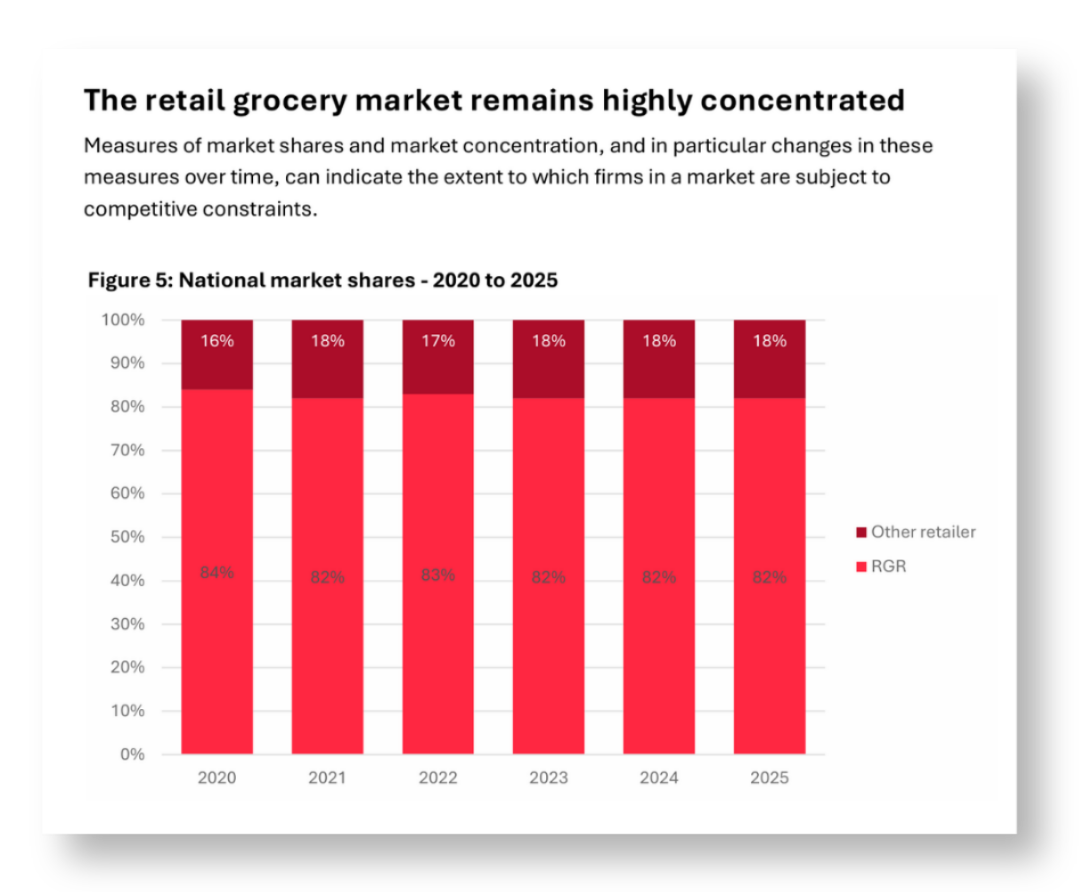
Source: Annual Grocery Report 2025/2026 - Commission analysis of sales revenue provided by industry participants and Statistics New Zealand data. RGR = Regulated Grocery Retailer

National’s proposal is the only one that changes market structure rather than ownership. It leaves every store in private hands and defers to the Commerce Commission. Willis is right that incremental reform has not delivered. ACT is against it. Foodstuffs points out that more than 500 owner-operated stores sit inside the two co-operatives. [5]

But all four reach for the till when the harder question is why nobody can build a shop.

Here is what that question looks like on the ground, twenty minutes from our Hastings office. In 2012, Foodstuffs North Island bought a site across the road from Pak’nSave Tamatea in Napier. It sold the site in 2015 with a covenant barring its use as a supermarket, one of a set running for up to 99 years. Woolworths had two stores in central Napier and none in the south of the city. The High Court found the covenant had been lodged to stop Woolworths, or anyone else, from developing a supermarket there. Justice Radich called the conduct deliberate and serious and, in August 2024, fined Foodstuffs $3.25 million, the largest penalty yet under section 28 of the Commerce Act. [6]

That is a Napier site that could have carried a third banner but did not. No act of nationalisation would have put one there. A rule did the damage, and a rule undid it. Grocery land covenants were banned in 2022 and are now unenforceable, but the Commission pursued the case anyway. [8]

Milton Friedman drew a distinction worth keeping in mind here. Being pro-free enterprise is not the same as being pro-business. Business corporations in general, he wrote, are not defenders of free enterprise but one of the chief sources of danger to it. Almost every owner wants open competition for everybody else and a little protection for himself. [7]

A covenant on a title is a moat dug by a company. A consent that takes years is a moat dug by a council. Both keep the third banner out, and the shopper pays for both. Defending property rights is not the same as defending the incumbent.

Yet four years on, there is still no third full-line chain in this country. Costco entered as a warehouse club, with its second site set to go up in Drury’s fast-tracked town centre. The Government now has a bill before the House creating a consenting express lane for new supermarkets. That is the admission. The binding constraint is not who holds the title. It is how long it takes to get a shop out of the ground. [8]

What changed Chile was not who held the shares but the conditions for competition: stable money, open entry, enforceable contracts and taxes that businesses could live with. From 1987 to 2015, the proportion of Chileans living below the national poverty line fell sharply, while income per person rose substantially. [9]

Scotsman Adam Smith made the same case centuries earlier: little else was needed to carry a state from the lowest barbarism to the highest degree of opulence but peace, easy taxes and a tolerable administration of justice. [10]
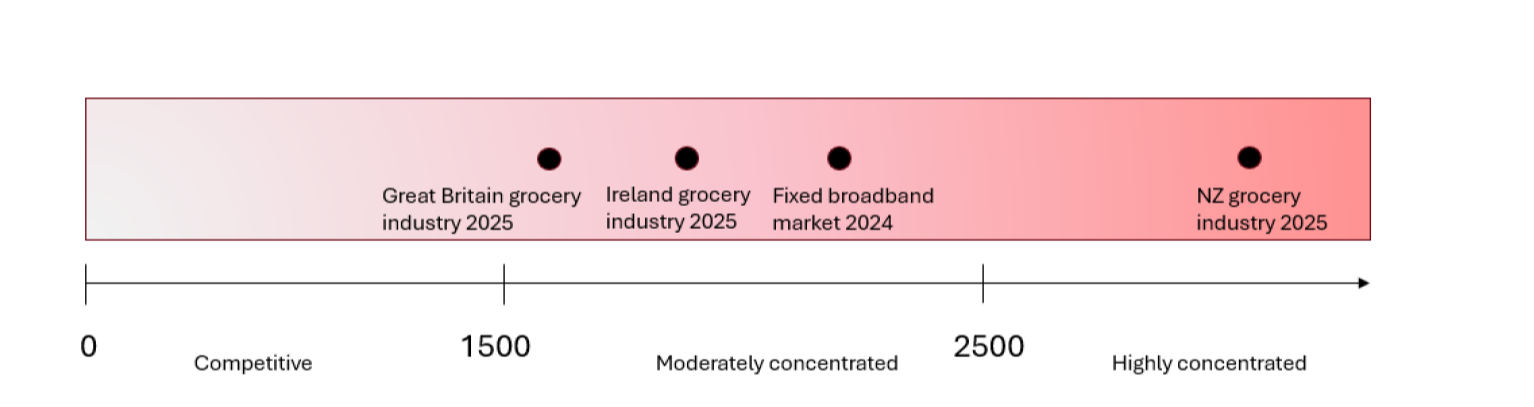
Source: Commerce Commission New Zealand

Herfindahl-Hirschman Index (HHI) takes the market shares of each firm in a market.

New Zealand’s grocery industry HHI for 2025 was 3,585 which indicates limited competitive pressure. Concentration in Auckland also remains high, with the HHI increasing to 2,635 in 2025, from 2,561 in 2024.

Click to view Annual Grocery Report

Smith’s other observation was our propensity to truck, barter and exchange. Nobody directed the socks or the coin, no price was named, and both of us came out ahead. The only authority involved was the biosecurity rule that stopped the honey, exactly the sort of plain, predictable rule Smith meant.

The honest part is what the coin leaves off. Chile’s reforms were imposed by a dictatorship, which stripped them of legitimacy. Growth continued after democracy returned in 1990: force set the policy, but reason made it stick. [9]

There is a cost in all of this that appears in none of the parties’ costings, and it lands on people who did not vote for any of it.

Every valuation rests on what a business will earn and the rate at which those earnings are discounted. Political risk goes into that rate. Lift it and the value falls, with no change in the till.

Neither Foodstuffs nor Woolworths New Zealand is listed here, and BNZ belongs to NAB, so no New Zealand portfolio moved directly on those announcements. The precedent is what moves. If a government can force an owner to sell a profitable business at a price set by the Crown, or legislate its structure apart, every regulated business in this country carries a little more risk than it did a month ago. Contact, Meridian, Genesis and Mercury are on that list, and New Zealand First has named them for a split of its own. So are the ports, airports and lines companies.

KiwiSaver held $138.8 billion at March 2026. Those companies sit inside it. The people who own them are not speculators. They are teachers, shearers and people in their sixties who have been contributing since 2007. [11]

Property rights are not an ideological flourish. They underpin every valuation of the shares held in your portfolio and KiwiSaver.

Fix the rules and competition follows. Buy the shops and the government owns the queue.

The Chileans put both options on their coat of arms and have tried each one: by reason or by force.

The vote will decide which of those we reach for. How you respond is still your choice and worth good counsel.


Nick Stewart

(Ngāi Tahu, Ngāti Huirapa, Ngāti Māmoe,
Ngāti Waitaha)

Financial Adviser and CEO at Stewart Group

  • Stewart Group is a Hawke's Bay and Wellington based CEFEX & BCorp certified financial planning and advisory firm providing personal fiduciary services, Wealth Management, Risk Insurance & KiwiSaver scheme solutions.

  • The information provided, or any opinions expressed in this article, are of a general nature only and should not be construed or relied on as a recommendation to invest in a financial product or class of financial products. You should seek financial advice specific to your circumstances from a Financial Adviser before making any financial decisions. A disclosure statement can be obtained free of charge by calling 0800 878 961 or visit our website, www.stewartgroup.co.nz


References

1. Espinosa, R. (2021). Salvador Allende’s development policy: lessons after 50 years. Economic Affairs; De Vylder, S. (1974). Allende’s Chile. Cambridge University Press.

2. Edwards, S. (2023). The Debauchery of Currency and Inflation: Chile, 1970–1973. NBER Working Paper 31890; Datosmacro.com. (1973). IPC de Chile 1973, reporting December 1973 CPI inflation of 508.0% year-on-year.

3. RNZ and 1News, 16 September 2026, National to pursue Pak’nSave and New World break up; NZ Herald, 3 September 2026, Greens promise to nationalise 120 supermarkets; RNZ and interest.co.nz, 17 May 2026, NZ First proposal to buy back BNZ and merge with Kiwibank; NBR, 16 September 2026, Labour price gouging policy.

4. Commerce Commission (2022). Market study into the retail grocery sector: Final Report, 8 March 2022; Reserve Bank of New Zealand banking sector statistics, 2026.

5. RNZ and 1News, 16 September 2026, National to pursue Pak’nSave and New World break up. The independent analysis cited by Nicola Willis modelled grocery prices 3.5% lower after one year and 5% lower after six, with $12.6 billion of consumer benefit over twenty years. Foodstuffs and ACT responses reported the same day.

6. Commerce Commission v Foodstuffs North Island Ltd, High Court, Wellington, August 2024; Commerce Commission media release, 8 August 2024; Simpson Grierson, Competition and Consumer Law Update, August 2024.

7. Friedman, M. (1999). The Business Community’s Suicidal Impulse. Cato Policy Report, Vol. XXI No. 2, for the quoted sentence; the wider argument runs through Friedman, M. and Friedman, R. (1980). Free to Choose. Harcourt Brace Jovanovich.

8. Commerce (Grocery Sector Covenants) Amendment Act 2022; Commerce Commission v Foodstuffs North Island, $3.25 million penalty, 2024; RNZ and Beehive, 12 November 2025, second Costco store at Drury and the supermarket consenting express lane bill.

9. World Bank. Poverty headcount ratio at national poverty lines (% of population) – Chile, 1987–2015; World Bank. GDP per capita (constant 2015 US$) – Chile, 1987–2015; Edwards, S. (2023). The Chile Project: The Story of the Chicago Boys and the Downfall of Neoliberalism. Princeton University Press.

10. Stewart, D. (1793). Account of the Life and Writings of Adam Smith LL.D., quoting a paper by Smith of 1755; Smith, A. (1776). An Inquiry into the Nature and Causes of the Wealth of Nations, Book I, Chapter 2.

11. Plan For Life research, KiwiSaver funds under management at March 2026.

Wholesale Investor Rules: Calling a Cat a Fish

Article #468

Abraham Lincoln liked to ask how many legs a dog has if you count the tail as one. Four, he said: calling the tail a leg doesn’t make it a leg. New Zealand’s wholesale investor rules have spent a decade calling tails legs. Last week a Christchurch courtroom finally counted.

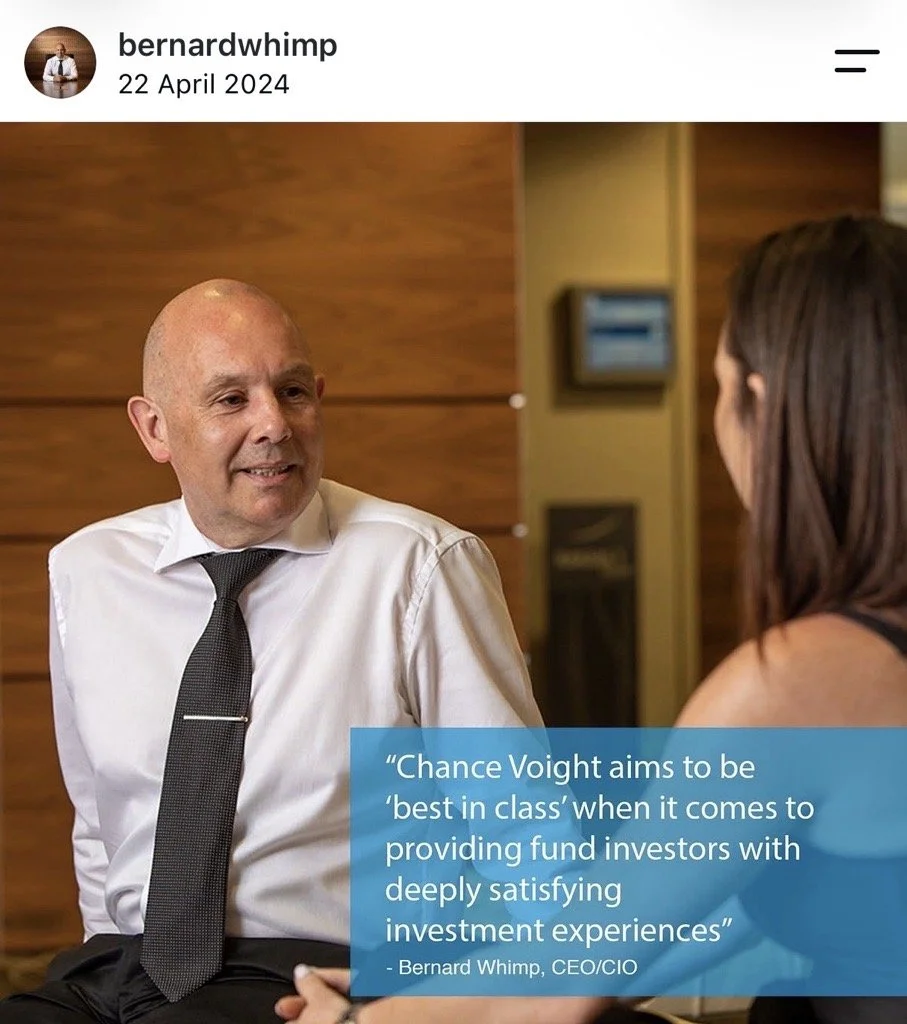
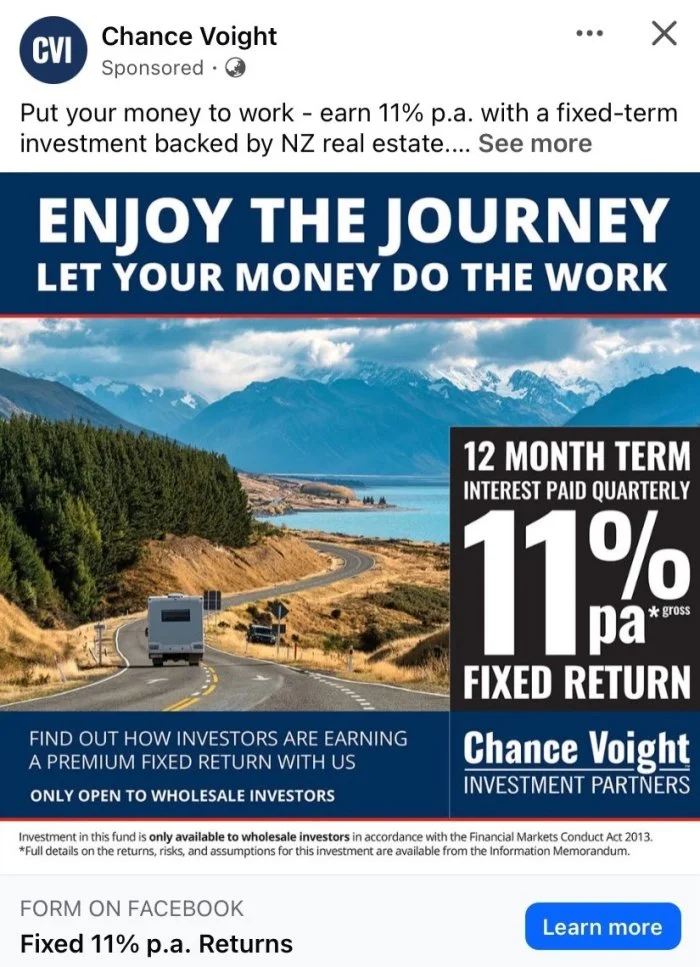
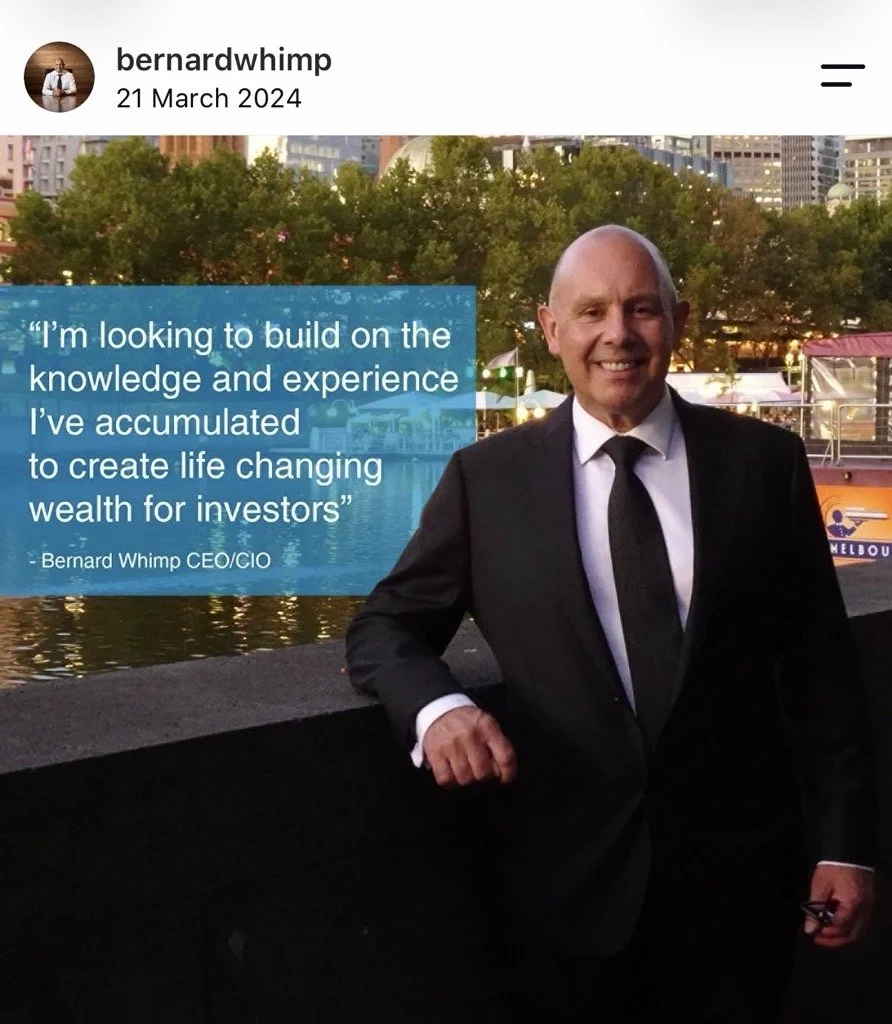
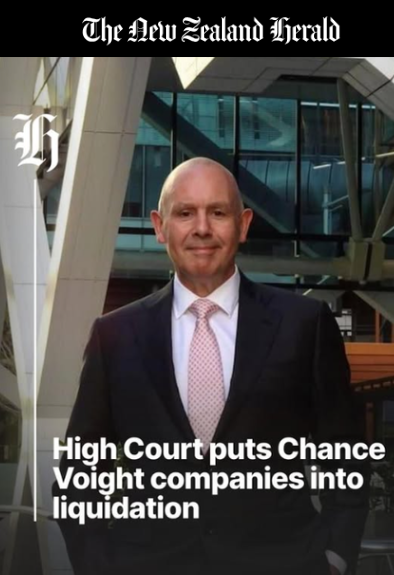
On Friday 24 July the High Court placed six companies in Bernard Whimp’s Chance Voight group into liquidation. Associate Judge Dale Lester found a pattern of obfuscation, incompetence and evasion, an entirely unsustainable model, and a scheme that could only pay existing investors by finding new ones. Founded in 2021, the group had raised more than $54 million from perhaps 230 people to pour into property-based wholesale debt promising returns of 10 to 13 per cent a year. By September 2025 it sat on a negative net asset position of $11.8 million. The evidence, the judge said, was overwhelming.

One detail is almost too good. Whimp asked the court to delay the hearing until he could unlock money from his late father’s estate, which, he said, would in turn fund a $110 million land development. The judge was unmoved, calling the request a microcosm of how the whole group had been run. Quite. You cannot conjure a solvent business from a deceased estate any more than you can pull a rabbit from an empty hat, though plenty have tried. Meanwhile a related Whimp entity had drawn some $9.2 million in “management fees”, around 24 per cent of all money invested, even as the group booked a $5.5 million trading loss in a single half-year. Fees, in other words, for failure.

Here is what should trouble every reader. Chance Voight’s investors were, in the main, aged 65 and over, and the first liquidators’ report found many had only a limited grasp of the risks. Yet each had been certified a “wholesale” investor: sophisticated enough, in law, to need no protection at all.

You can call a cat a fish, but you can’t teach it to swim.

The mechanism is simple. The Financial Markets Conduct Act lets companies raise money without disclosure, licensing or supervision, provided the investors are wholesale. Under the “eligible investor” rule, anyone can claim that badge so long as a financial adviser, chartered accountant or lawyer signs to agree. Tick the box, and every retail protection evaporates. And this was no discreet, professional affair: the court noted Chance Voight was marketed in regional and local newspapers, on Facebook and at in-person promotional events, the mass channels of the retail world, not the closed room of the true professional.

A long process for a too-low bar 

The regulator has been uneasy for years. When the FMA took a test case to force issuers to verify the investors sent their way, it lost: Justice Fitzgerald found the permissive regime was a feature of the law, not a bug. But she put her finger on the fault. The problem, she observed, was not so much the content of the certificates as that certificates with patently defective grounds, or none at all, were being confirmed regardless. It is the confirmation process that is falling down; and if it cannot protect investors, the balance struck in the legislation may need resetting, a matter, she said, for Parliament and not the court.

That was the judiciary handing the problem to the politicians. This month, at last, they picked it up. Commerce Minister Cameron Brewer has released an MBIE consultation, part two of the plan to lift our capital markets, that concedes what advisers have muttered for years: our settings are an international outlier, “unique” and “relatively permissive,” with “some evidence” that inexperienced investors are getting into wholesale offers. Its options read like a reply to Fitzgerald: a more objective eligibility test, a cap on how much an eligible investor can put at risk, a requirement that applicants take independent financial advice, restrictions on wholesale advertising, and, squarely, real onus on the professional confirmer, with an infringement offence for inadequate certifications.

Click above to read more on Wholesale Investors from the Financial Markets Authority

What still needs attention 

Those are the right levers, and they should be pulled. None of this is an argument for tearing the regime down. Genuine sophisticated investors exist, and raising capital from them without the full disclosure burden is a legitimate and valuable part of a working market. MBIE rightly notes that certificates lasting only two years already make life needlessly costly for real professionals. The point is narrower. The bar has been set too low, left to rot, and waved through by people with every incentive not to look too closely. Consider that none of the thresholds, $5 million in net assets, a million-dollar investment history, a $750,000 minimum subscription, has been adjusted for inflation since the Act took effect in 2013. Thirteen years of asset-price growth, house prices above all, has done the widening for Parliament: the same numbers now capture people they were never meant to reach. The bar did not get more generous; the country simply ran up more nominal dollars against a line that never moved. Last year the FMA referred 22 accountants and eight lawyers to their professional bodies over the misuse of these very certificates.

Two gaps deserve more than the paper gives them.

The first is the advice layer. A retail adviser must put the client’s interests first and prove a recommendation is suitable: goals, cash flow and appetite for risk, all understood and documented, the file running to fifty pages. A wholesale-only adviser owes a bare statutory duty to give priority to the client’s interests, but needs no FMA licence, follows no Code of Professional Conduct, and never has to establish that the advice was suitable. The relationship can be purely transactional: take the $5 million, place it in a syndicate, move on. If you think professional advice is expensive, try the amateur variety.

The second is the Crown’s own hand. Of the roughly 70 managed funds on Invest NZ’s “acceptable” list for Active Investor Plus migrants, against nearly $1.5 billion of committed capital, all but a handful are wholesale, and few are household names. Invest NZ’s own disclaimer states that inclusion is not an endorsement or recommendation by it or the Government. We invite wealthy newcomers to make this country home, steer them onto a state-curated list, then wash our hands of what follows. All care, no responsibility. A wealthy migrant, a surgeon, a farmer, someone who simply inherited well, may know nothing of geared, illiquid property debt, yet is stamped “wholesale” on a net-asset figure alone. Funds on a Crown list should answer to retail-grade disclosure, not hide behind the wholesale tag.

Underneath it all sits a regulator half in the dark. The IMF warned back in 2017 that there was insufficient data to assess the risks in our wholesale sector; nine years on, the FMA has admitted it still has very little sense of the size, structure or practices of that market. You cannot police what you have never measured.

Two centuries ago the little port of Kōrorareka, on the same Bay of Islands coast that cradled New Zealand’s first capital, was infamous as the Hell Hole of the Pacific, a settlement beyond the reach of any law. We renamed it Russell, gentrified it, and told ourselves the lawlessness was history. But a regime that lets an operator gather tens of millions from retirees on a one-page certificate nobody properly checks, through advisers who owe them little and a regulator the courts say owes them nothing, has not left the frontier behind. One judge has wound the companies up. Another has told Parliament what to fix. Submissions close on 25 August. Make sure the reform closes the loophole, rather than merely repaints the saloon.*

* Stewart Group does not provide advice to investors under the wholesale investor rules. We took that decision years ago, in the view that all investors deserve full disclosure and a fiduciary relationship. 


Further Reading: For those interested in the wholesale investor discussion, this guide provides a practical overview of the key differences between retail and wholesale investors, including eligibility criteria, investor protections and regulatory requirements.


Nick Stewart

(Ngāi Tahu, Ngāti Huirapa, Ngāti Māmoe,
Ngāti Waitaha)

Financial Adviser and CEO at Stewart Group

  • Stewart Group is a Hawke's Bay and Wellington based CEFEX & BCorp certified financial planning and advisory firm providing personal fiduciary services, Wealth Management, Risk Insurance & KiwiSaver scheme solutions.

  • The information provided, or any opinions expressed in this article, are of a general nature only and should not be construed or relied on as a recommendation to invest in a financial product or class of financial products. You should seek financial advice specific to your circumstances from a Financial Adviser before making any financial decisions. A disclosure statement can be obtained free of charge by calling 0800 878 961 or visit our website, www.stewartgroup.co.nz


REFERENCES

1. “Court slams Whimp entities into liquidation; Kerr bankrupted in the UK.” David Chaplin, Investment News NZ, 26 July 2026.

2. “‘Unsustainable’ Chance Voight companies put into liquidation.” NBR, 24 July 2026 — judgment of Associate Judge Dale Lester; Teneo’s John Fisk, Lara Bennett and Malcolm Hollis appointed liquidators; comments of FMA enforcement head Margot Gatland.

3. David Chaplin, “Wholesale investment: there’s a hole in the market.” BusinessDesk, 21 July 2026.

4. “Government looking at wholesale investor loophole.” Good Returns, 17 July 2026; “Government seeks feedback on loophole exposing unsavvy investors to risky deals.” NZ Herald, July 2026.

5. Ministry of Business, Innovation and Employment, capital markets reform discussion paper (part two), July 2026. Submissions close 25 August 2026.

6. First interim liquidators’ report on the Chance Voight group (PwC), 2026 — investor age profile and limited risk understanding; “management fees” of $9.2m, some 24% of funds invested; $5.5m half-year trading loss; negative net assets of $11.8m at 30 September 2025.

7. Financial Markets Authority, [2025] NZHC 2723 — judgment of Fitzgerald J (18 September 2025) on the confirmation process and the balance struck in the legislation.

8. Financial Markets Authority — referral of 22 accountants and eight lawyers to their professional bodies over misuse of eligible investor certificates.

9. International Monetary Fund, Financial Sector Assessment Programme, New Zealand, 2017; FMA review of custody arrangements, 2026.

10. Invest New Zealand / Immigration New Zealand, Active Investor Plus visa: list of acceptable managed investment schemes and non-endorsement disclaimer.

11. Financial Markets Conduct Act 2013, Part 3 and Schedule 1.

12. “Kōrorareka — the Hell Hole of the Pacific.” Te Ara / NZ History, Ministry for Culture and Heritage.


Not all that Glitters: A Hawke’s Bay Perspective on Investment Lures

Walking your dog along the banks of the Tuki Tuki River on a crisp Hawke's Bay morning, you might spot an angler casting their line into the current. If you look closely at the tackle box, you'll find an array of brightly coloured lures - fluorescent pinks that practically glow in daylight, electric greens that shimmer with an unnatural brilliance, shimmering silvers that catch every ray of sun. Each one is a masterpiece of design, engineered to trigger a response. They're designed to catch something, all right. But it's not always the fish.

Lures work because they exploit instinct. That flash of silver mimics a wounded baitfish. The vibrant pink stands out against murky water. The electric green triggers a predatory response. But here’s the thing - the lure doesn’t need to fool the fish to be successful. It only needs to fool the angler into buying it. The brightest, most eye-catching lures often sit in tackle boxes, never touching water, while experienced fishers reach for duller, more practical options that actually work.

Charlie Munger, the late investing legend and Warren Buffett’s long-time partner, once recounted a conversation that cuts to the heart of how financial products are really sold. He’d asked a fishing lure salesman whether fish actually bit on those garish purple and green contraptions. The man’s response was disarmingly honest: “Mister, I don’t sell to fish.” [1]

That simple line exposes an uncomfortable truth about the investment industry - one that’s struck particularly close to home here in Hawke’s Bay in recent times. In October 2025, the Financial Markets Authority issued a formal warning to Finbase (HP Capital Limited) over serious breaches relating to their Single Investment financial products - essentially property lending arrangements.[2] This is the same company that had been running full-page advertisements in the Hawke’s Bay Today, using search terms like “term deposit” and “low risk investment NZ” to attract investors.

But there’s more. Also in October, MyFarm Investments’ Rākete Orchards partnership, which grows Rockit apples across six Hawke’s Bay orchards valued at $17.4 million, entered voluntary administration. [3]  When launched in late 2017, the investment closed oversubscribed at $13 million, with forecasts of returns exceeding 50-55% per annum. [4]  Those shiny projections now look very different.

The irony is impossible to miss. Full-page ads in our local paper projecting stability and legitimacy - the investment equivalent of fluoro pink lures. Promises of safety using familiar terms like “term deposit” - the shimmering silver that mimics something trustworthy. Bold marketing campaigns featuring impressive return projections - the electric green designed to stand out from everything else. None of it was designed to catch fish. It was all designed to catch us.

The FMA found that Finbase’s advertising created a false impression that their investment products were comparable to term deposits when they differed significantly in nature and characteristics.[2] The use of familiar, reassuring terminology masked the real nature of the investment and its risks. Meanwhile, Rākete’s chair blamed low returns, noting that demand hadn’t grown sufficiently, and high costs meant returns were insufficient to support ongoing operations.[5]

Humans are predictable creatures, and decades of behavioural finance research has mapped our psychological vulnerabilities. We’re drawn to familiar-sounding terms because they trigger associations with safety and certainty. We’re attracted to branded agricultural products because they seem tangible, real, and connected to what we know. We trust advertisements in our local newspaper more than we probably should. The investment industry understands this intimately and constructs marketing designed to activate them, whether or not the product serves our actual interests.

Here in Hawke’s Bay, we pride ourselves on straight talk and honest work. Our regional economy is built on things you can touch and understand - orchards heavy with export-quality apples, vineyards producing wines that compete on world stages, farms raising premium livestock. There’s no mystery about how value is created in these industries. You plant, you tend carefully, you harvest, you continually improve your methods. Real results come from patience, expertise, and time.

Successful investing follows these same unglamorous principles. It’s buying quality businesses at reasonable prices and holding them through inevitable market cycles. It’s diversifying sensibly across different asset classes and geographies. It’s keeping costs and fees low. It’s maintaining emotional discipline when markets fluctuate. It’s resisting the powerful urge to chase whatever looks shiniest or promises the highest returns.

This approach doesn’t generate compelling marketing copy. It doesn’t require full-page advertisements. It doesn’t promise 50%+ annual returns that sound too good to be true. But that’s precisely why it’s harder to sell. Boring doesn’t capture attention. Prudent diversification doesn’t create excitement. Modest, realistic projected returns don’t make headlines.

When someone presents an investment opportunity backed by aggressive marketing - whether splashed across the Hawke’s Bay Today or promoted through carefully optimised online search terms - ask yourself fundamental questions: Is this designed to catch fish, or catch me? Why does something supposedly offering solid, legitimate returns need this level of promotional spending? What happens if rosy projections don’t materialise? What are the realistic worst-case scenarios?

This is where seeking wise counsel becomes essential. Look for advisers with rigorous due diligence processes and recognised certifications like CEFEX, which demonstrates commitment to fiduciary excellence and systematic client protection.[6] These aren’t shiny credentials designed to impress - they’re evidence of thorough, unglamorous processes that protect investors.

A good adviser asks uncomfortable questions about any investment: What are the real, not theoretical, risks? How dependent is success on optimistic assumptions about markets, demand, or costs? How liquid is this investment if circumstances change? Can you genuinely afford to lose this money? Most importantly, have similar investments really delivered returns as promised, or is there a pattern of disappointments?

Finbase exceeded regulatory limits and used advertising that misled potential investors about fundamental product characteristics.[2] With Rākete, even real orchards growing actual apples in Hawke’s Bay soil didn’t deliver the projected economics. Other Rockit growers reported returns well under the $1.10 per tube needed to break even, forcing difficult decisions about their orchard futures.[3]

The consequences of getting these decisions wrong aren’t abstract. They affect real people in our community - retirees who thought they were safely parking their retirement savings, families who believed they were making prudent decisions while supporting local agriculture, individuals who trusted that bold advertising in their trusted local newspaper meant something had been thoroughly vetted and deemed appropriate for ordinary investors.

The magpie, despite its considerable intelligence, can’t resist a shiny object. It’s hardwired evolutionary instinct. But we can do better.

Next time you’re walking your dog along the Tuki Tuki and see those bright lures glinting in an angler’s tackle box - let them serve as a useful reminder. The brightest lures are often the ones that never get wet. In fishing, as in investing, the flash and colour serve one primary purpose - to catch you, not the fish.

Because the question isn’t whether the lure looks attractive, uses comfortable terminology, appears in trusted publications, or involves tangible Hawke’s Bay assets. The question is simple and profound: who is it really designed to catch?

Your financial future deserves better than bright colours and borrowed credibility. It deserves honesty, transparency, realistic assumptions, thorough due diligence, and advice that genuinely serves your interests rather than someone else’s sales commission.

Unless you’re a magpie, you don’t have to take the bait.

Nick Stewart
(Ngāi Tahu, Ngāti Huirapa, Ngāti Māmoe, Ngāti Waitaha)

Financial Adviser and CEO at Stewart Group

  • Stewart Group is a Hawke's Bay and Wellington based CEFEX & BCorp certified financial planning and advisory firm providing personal fiduciary services, Wealth Management, Risk Insurance & KiwiSaver scheme solutions.

  • The information provided, or any opinions expressed in this article, are of a general nature only and should not be construed or relied on as a recommendation to invest in a financial product or class of financial products. You should seek financial advice specific to your circumstances from a Financial Adviser before making any financial decisions. A disclosure statement can be obtained free of charge by calling 0800 878 961 or visit our website, www.stewartgroup.co.nz


References

  1. Poor Charlie's Almanack: The Wit and Wisdom of Charles T. Munger

  2. Financial Markets Authority. (2025, October). "FMA issues warning to Finbase over serious disclosure and fair dealing breaches." Retrieved from https://www.fma.govt.nz/news/all-releases/media-releases/warning-to-finbase/

  3. Farmers Weekly (2025, October 15). MyFarm’s Rockit partnership turns sour as Rākete orchard enters voluntary administration

  4. Rural News Group. (2017, December 16). "A chance to pocket from Rockit." Retrieved from https://www.ruralnewsgroup.co.nz/rural-news/rural-agribusiness/a-chance-to-pocket-from-rockit

  5. NZ Herald. (2025, October 28). "Rockit apple grower Rākete Orchards in voluntary administration." Retrieved from https://www.nzherald.co.nz/business/companies/agribusiness/rockit-apple-grower-rakete-orchards-in-voluntary-administration/PNH4JTBZHBHLTLPF7XAMS5U474/

  6. Centre for Fiduciary Excellence (CEFEX). For more information on fiduciary certification standards, visit www.cefex.org